Beauty Product Photography That Sells: Why Makeup Brands Need Professional Images
Table of Contents
Why Professional Beauty Photography Matters for Makeup Brands
How Pros Capture True Texture, Color & Finish
The Ecommerce Advantage: “Before & After” Differences You Can See
Choosing the Right Studio for Beauty Product Photography
Minimum Viable Photo Set for a Beauty Launch
Key Takeaways
In beauty ecommerce, your images are the product experience – small visual inaccuracies can cost you trust, conversions, and sales. Professional makeup product photography delivers the color accuracy, texture detail, and finish clarity shoppers need to buy with confidence. The result is stronger brand credibility, higher conversion rates, and fewer costly returns.
Makeup is one of the most visual, trust-dependent products you can sell online. Shoppers can’t test a foundation’s undertone through a screen or swipe a shimmer to see how it catches the light – so your images have to do that work for them.
That’s why beauty photography isn’t just a “nice-to-have” – it’s an essential conversion tool. The difference between DIY shots and professional beauty product photography often shows up where it matters most: click-through rates, add-to-carts, and fewer returns.
In this guide, we’ll break down what professional photographers do differently, from controlled lighting and macro detail to color-accurate workflows that keep pigments, skin tones, and finishes true – plus the image types that help makeup brands sell more confidently online.
Why Professional Beauty Photography Matters for Makeup Brands
If your product images feel even slightly “off,” shoppers notice … and they hesitate. In beauty ecommerce, hesitation kills momentum because customers are trying to answer a simple question fast: Will this look like the photos when it arrives?
Professional makeup product photography helps you remove that doubt. It presents your product the way buyers want to evaluate it: clear shade representation, crisp packaging detail, and a finish that reads accurately – matte, satin, glossy, shimmer – without distortion from mixed lighting or aggressive phone processing.
DIY images usually fall short for the same reasons
Inconsistent lighting: harsh shine and flat texture
Color shifts:distorted shades and undertones
Soft focus:lost pigment and packaging detail
Mismatched styling: a product line that feels less premium
High-quality images of cosmetics don’t just make your listings more compelling, they make them clearer. And that clarity pays off in three important ways:
Builds buyer confidence: less second-guessing at the moment of purchase
Improves conversion rates: clearer images = faster decisions
Helps prevent returns: fewer “not what I expected” surprises
How Pros Capture True Texture, Color & Finish
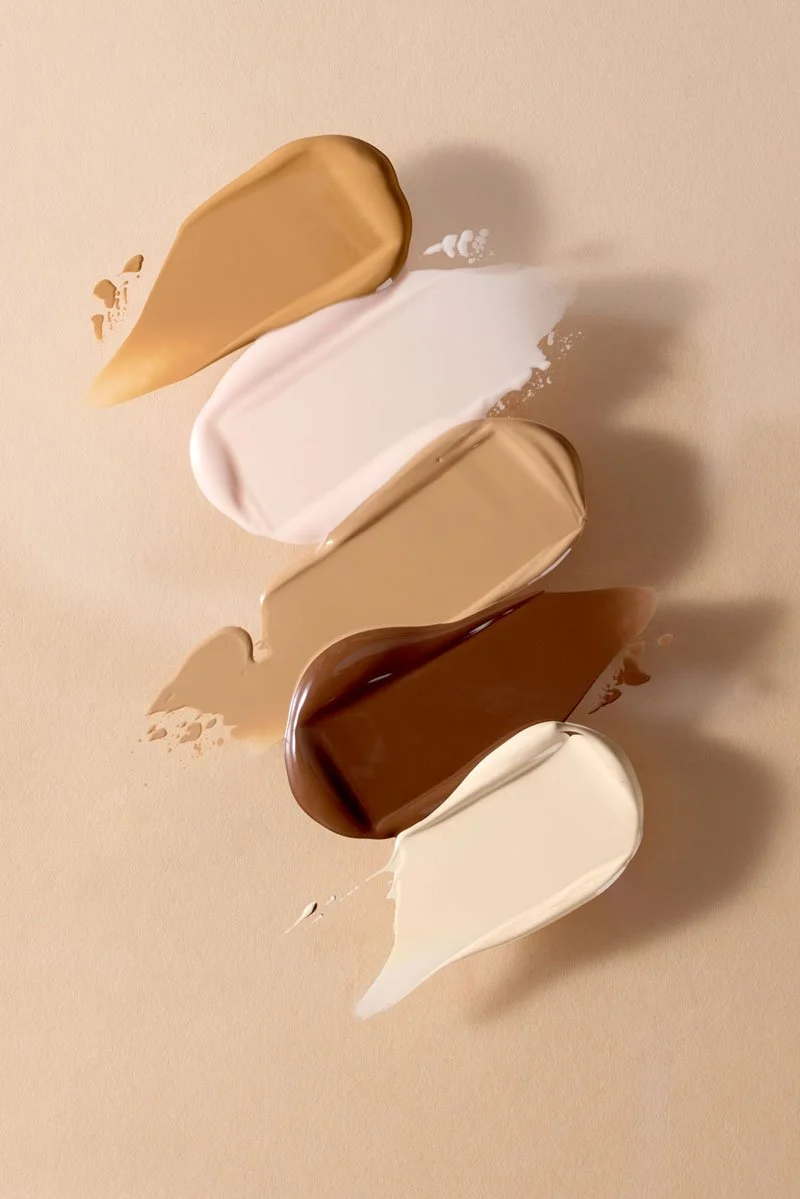
When makeup photography is done well, it feels almost “swatchable.” You can see the difference between a creamy balm and a dense pomade. You can tell if a powder is silky or chalky. And most importantly, the shade you fall in love with on-screen looks like the shade that shows up at your door.
That doesn’t happen by accident. It happens because professional beauty product photography is built around control: controlled lighting, controlled color, and controlled detail.
Controlled Lighting: Shape, Softness & Shine (Without Glare)
Makeup and packaging are unforgiving under messy light. Mixed window light and overhead bulbs create weird hotspots, muddy shadows, and finishes that read wrong. Glossy turns oily, matte turns flat, shimmer turns shabby.
As professional makeup photographers, we use repeatable studio lighting to ensure a polished, consistent look across every SKU:
Control shine on glosses, balms, and reflective components
Keep shadows clean so products look dimensional, not dingy
Reveal texture intentionally (not accidentally)
Handle reflective packaging by shaping reflections instead of fighting them
Controlled Color: Accurate Undertones from Capture through Edit
With makeup, undertone is the product. Consider a foundation that runs warm vs. neutral. A red lipstick that leans blue vs. orange. A nude that’s “your perfect shade” until it shows up two tones darker. In beauty, color accuracy is a deal breaker.
We prevent the expectation vs. realization mismatch with color-accurate workflows, which typically include:
Consistent studio lighting, no mixed color temperatures
Color references + calibrated monitors so tones stay true end-to-end
Intentional white balance and skin-tone management during retouching
The goal isn’t to make everything look “prettier.” It’s to make it look truthful, especially for foundations, pigments, and shimmers where tiny shifts change what customers believe they’re buying.
Controlled Detail: Macro Texture That Makes Products Feel Real
Texture sells makeup. Shoppers want to see the creaminess, the payoff, the finish – not a smudged blur or an over-processed phone shot.
We capture the micro-details buyers actually judge:
Creams and balms without making them look greasy
Powders without turning them dusty or chalky
Gloss and liquids with dimension, not blown-out highlights
Shimmer and glitter that reads crisp and clean
Packaging details like embossing, typography, and edges; sharp, premium, consistent
This is where professional setups far outperform DIY: they’re designed to preserve fine detail without heavy smoothing, compression artifacts, or artificial sharpening.
The Ecommerce Advantage: “Before & After” Differences You Can See
If you’re investing in professional beauty photography after a failed DIY attempt, the payoff shouldn’t be subtle. A good reshoot makes your listings look cleaner, clearer, and more credible at a glance – which is exactly what drives clicks and reduces second-guessing.
Detail gets sharper – especially where buyers zoom
DIY images often look fine until a shopper pinches to zoom. Pro shots hold up: crisp labels, clean edges, readable typography, and texture you can actually see.Shades look truer (and undertones behave)
With controlled color and consistent lighting, foundations, reds, nudes, and pigments stop drifting warmer/cooler from one image to the next. What you show is closer to what customers receive.Lighting becomes consistent across the full line
No more “this one is bright, that one is yellow, this one is shadowy.” A collection looks like a collection, which instantly elevates perceived quality.Finishes read correctly
Matte stays matte. Gloss looks dimensional. Shimmer is intentional. That clarity helps shoppers choose faster and with more confidence.Packaging looks premium, not problematic
Reflective components and metallic finishes are controlled instead of blown out. The product looks high-end, without glare, hotspots, or distracting reflections.
Choosing the Right Studio for Beauty Product Photography
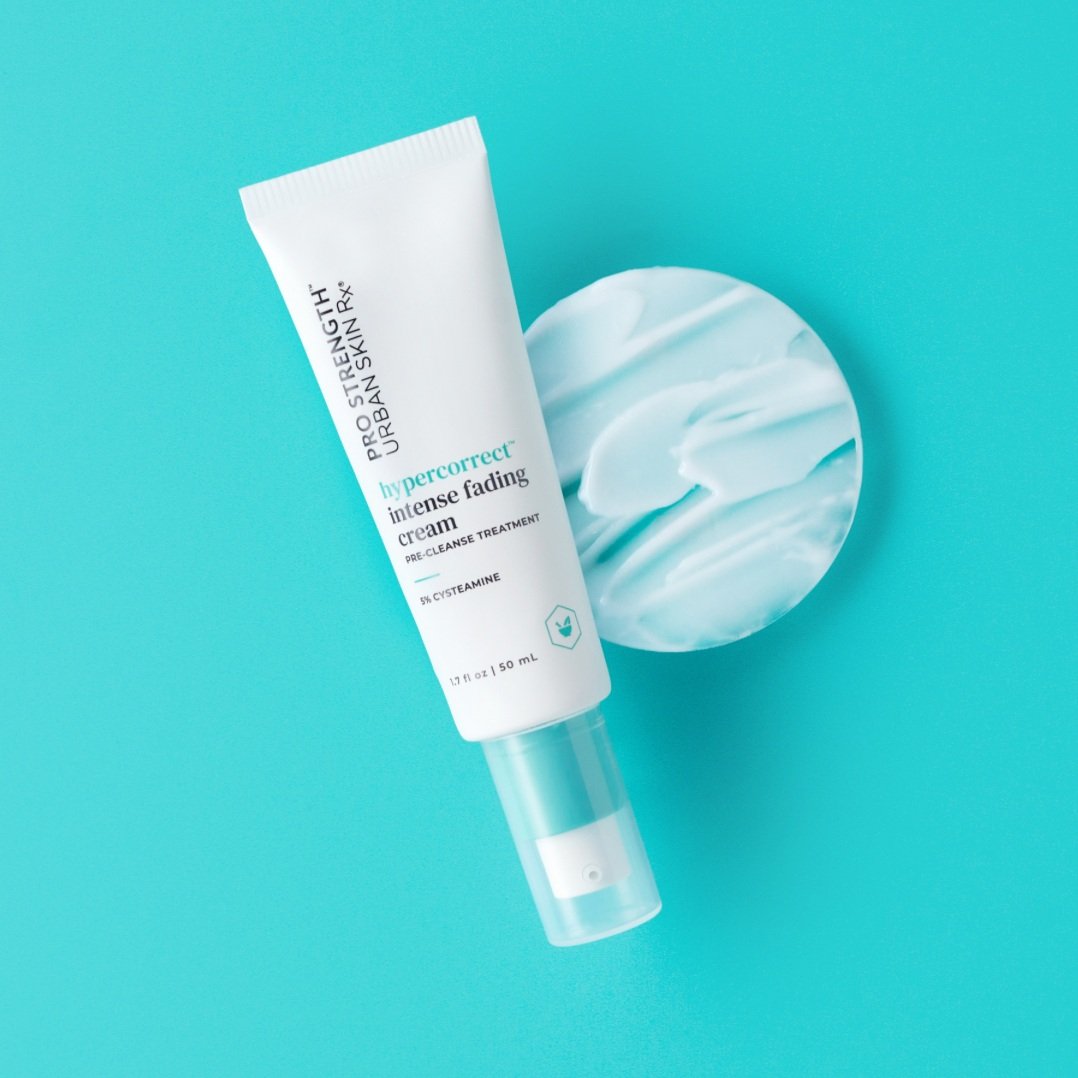
Urban Skin Rx lotion on teal paper with sample swatch on side.
Not every “product photographer” is set up for beauty. Makeup is one of the most technical ecommerce categories – between shade accuracy, micro-texture, and reflective packaging, small mistakes show up fast (and cost your credibility).
When comparing studios, it helps to review a team’sfull capabilitiesand deliverables. Here are some specifics to look for when you’re choosing your ideal studio partner:
Proof they can keep color consistent
Ask to see a shade range or a multi-SKU line they’ve photographed. You’re looking for consistent whites and skin tones; undertones that don’t drift warmer/cooler between images; and the same product looking the same across angles.Texture and finish that read true
Beauty isn’t flat. A strong studio can show matte vs satin vs glossy without making products look greasy or dull; shimmer and glitter that looks fresh and exciting; and macro detail that holds up when shoppers zoom.Experience with reflective and “difficult” packaging
If your components are metallic, glossy, mirrored, or acrylic, ask for examples. The right team can control reflections in-camera, not “fix it later.”Repeatable consistency across a full line
Consistency is the difference between “nice photos” and a cohesive brand. Look for the same angles, crops, and lighting across SKUs; a repeatable setup for future launches; and clear naming/organization so your team can actually use the library.Deliverables that match where you sell
A good studio will ask where the images are going (product detail page, Amazon, socials, Etsy, ads) and deliver accordingly: marketplace-ready crops/ratios; web-optimized files (without losing detail); and a mix of “must-have” ecommerce shots plus a few marketing-ready assets. (More on this in the next section.)A process that makes it easy on your team
Look for a clear workflow: shot list alignment, styling guidance, review rounds, and predictable turnaround. You shouldn’t have to manage the shoot like a second job.
Minimum Viable Photo Set for a Beauty Launch
If you’re launching a new product (or adding shades), you don’t need hundreds of assets – you need the right mix for how people actually shop makeup online. A “minimum viable” set covers ecommerce listings, marketplace requirements, and your first round of marketing without overproducing.
10-12 Images Per SKU (or Per Shade Where Relevant)
3-4 core ecommerce shots: front hero, back/label, open/closed, angle variation (built for product photography)
2-3 texture + shade images: swatches/smears/macros that show finish and payoff
2 packaging/detail shots: logo, embossing, applicator, materials (zoom-worthy)
1-2 “see-it-all” views: cohesive multi-angle sets that help shoppers evaluate the full component
1 creative hero image: a clean, brand-elevating composition for launch graphics
Plus 6-10 Social-First Assets (Per Product Line)
A mix of product-in-hand, routine moments, and quick finish/texture visuals designed for paid + organic social.
At Rainey Day Media, we help lower your decision fatigue by offering ecomm kits– pre-built bundles that take the guesswork out of what to shoot. Our ecomm Starter Kit, for example, is built around white-background essentials. Other kits add a styled hero, additional angles, hand and full body models, and motion assets like GIFsand a short product video. These sets give you enough coverage to sell confidently on your PDP (Product Detail Page) while also creating variety for ads, email, and launch content – without overproducing.
Want help mapping a shot list to your SKUs and sales channels? Explore our servicesor reach out to the Rainey Day Media team. We can’t wait to pair our photography with your makeup products!